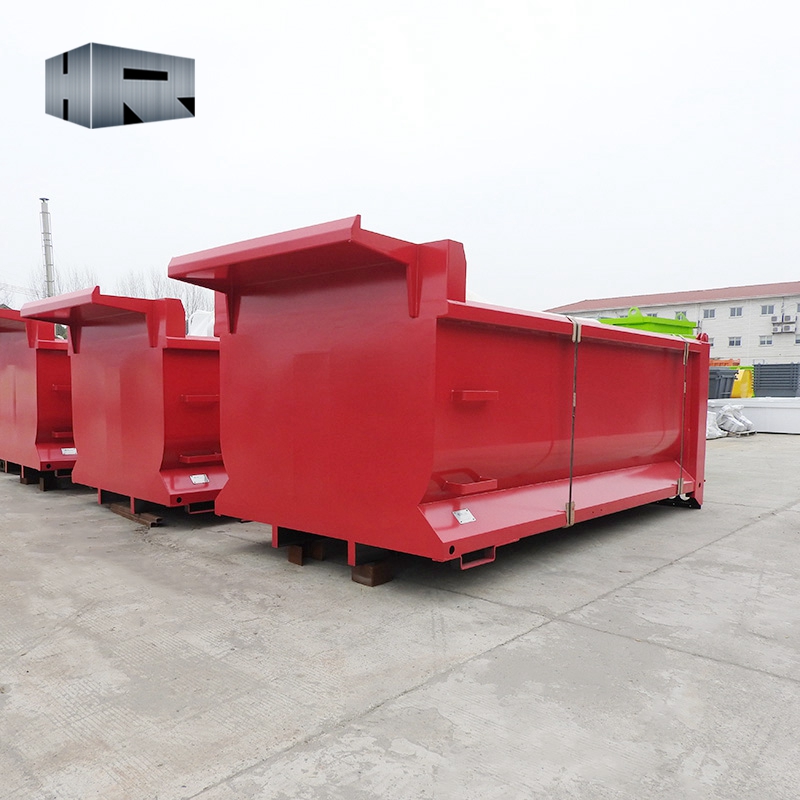
Comprehensive Safety Standards Governing Heavy-Duty Skip Bin Manufacturing
Introduction to Skip Bin Safety Standards
Heavy-duty skip bins serve as critical equipment in construction, industrial, and waste management sectors, handling substantial loads often exceeding several cubic meters in capacity. The manufacturing of these robust containers requires strict adherence to numerous safety standards that ensure structural integrity, operational reliability, and user protection. These regulations span material specifications, design principles, manufacturing processes, and operational guidelines, creating a comprehensive framework that addresses all potential hazards associated with skip bin usage.
Safety standards for skip bins have evolved significantly in response to industrial accidents, environmental concerns, and technological advancements. Modern regulations incorporate lessons learned from equipment failures while anticipating new challenges posed by heavier loads, harsh operating conditions, and specialized waste materials. This article examines the complex network of international, national, and industry-specific standards that govern heavy-duty skip bin manufacturing, providing manufacturers and users with essential knowledge for compliance and safety assurance.
Material and Structural Standards
Steel Specifications and Quality Requirements
The foundation of heavy-duty skip bin safety begins with material selection, primarily focusing on steel grades and their mechanical properties:
Q235 and Q345 Steel Grades: These Chinese standard structural steels represent common choices for skip bin manufacturing, offering balanced strength, formability, and weldability. Q235 provides yield strength of 235 MPa, while Q345 offers higher strength at 345 MPa yield strength, suitable for heavier loads.
ASTM A36/A572: International equivalents used in Western markets, with A36 providing similar properties to Q235 and A572 Grade 50 matching Q345 characteristics. These steels must meet strict chemical composition and mechanical property specifications to ensure consistent performance under load.
Material Thickness Standards: Heavy-duty skip bins typically utilize steel thicknesses ranging from 2mm to 6mm, with specific applications determining optimal gauges. Critical structural components often employ thicker materials, while non-load-bearing sections may use lighter gauges for weight reduction.
Structural Design Requirements
Skip bin structural integrity relies on sound engineering principles codified in various standards:
Load Capacity Markings: All heavy-duty skip bins must display maximum load capacity information prominently, calculated according to ISO 9001 quality management principles and structural engineering standards.
Corner Reinforcement: Standards mandate additional reinforcement at stress concentration points, particularly corners and lifting points, to prevent deformation during loading and transport.
Welding Standards: ISO 3834 and AWS D1.1 specify welding procedures, qualifications, and inspection requirements for skip bin fabrication. Continuous welds are typically required for all structural joints in heavy-duty applications.
Manufacturing Process Standards
Quality Control During Production
Manufacturing facilities must implement rigorous quality management systems to ensure consistent product safety:
ISO 9001 Certification: This international standard for quality management systems provides the framework for controlling manufacturing processes, documenting procedures, and maintaining product consistency.
In-Process Inspection: Critical manufacturing stages require verification, including material certification, weld inspections, dimensional checks, and final product testing. These procedures align with ISO 17638 for non-destructive testing of welds.
Surface Treatment Standards: Protective coatings must comply with ISO 12944 for corrosion protection, specifying paint systems appropriate for the skip bin's intended environment (industrial, marine, or chemical exposure).
Specialized Manufacturing Techniques
Certain heavy-duty applications demand specialized production methods:
Hot-Dip Galvanizing: For bins exposed to corrosive environments, ISO 1461 specifies requirements for hot-dip galvanized coatings on iron and steel products, ensuring long-term corrosion resistance.
Press Brake Forming: Metal forming processes must adhere to machine safety standards like ISO 12100 for risk assessment and ISO 13849 for safety-related control systems.
Operational Safety Standards
Lifting and Handling Requirements
As skip bins frequently move between locations using specialized equipment, strict standards govern their lifting systems:
Lifting Point Design: EN 12693 outlines requirements for lifting points on waste containers, ensuring compatibility with standard hook-lift systems and adequate safety margins for dynamic loads.
Load Securement: Standards derived from road transport regulations (such as EN 12195) influence skip bin design features that facilitate proper load restraint during transportation.
Hook-Lift Compatibility: Manufacturers must ensure their bins interface correctly with standardized hook-lift systems, following ISO 7135 for earth-moving machinery and related equipment.
Workplace Safety Integration
Skip bins operate within broader workplace safety frameworks:
Hazard Communication: ANSI/ASME standards require clear marking of potential hazards, including load limits, center of gravity indicators, and material handling instructions.
Ergonomic Design: ISO 6385 principles guide features like loading heights and access points to minimize worker strain during loading and unloading operations.
Fire Prevention: For bins handling flammable waste, standards may require fire-resistant materials or designs that limit oxygen flow to stored materials.
Environmental and Hazardous Material Standards
Waste Containment Requirements
Skip bins handling hazardous or special wastes must meet additional environmental protection standards:
Liquid Containment: For bins transporting liquid wastes or materials generating leachate, standards require liquid-tight designs with secondary containment capabilities per EPA and equivalent international regulations.
Dust and Emission Control: Bins handling dusty materials or volatile substances must incorporate design features that minimize particulate and vapor release during transport and storage.
Hazardous Waste Compatibility: When used for hazardous waste collection, skip bins must meet material compatibility requirements specified in standards like GB 18597 for hazardous waste storage.
Cleaning and Decontamination
Standards for skip bin maintenance ensure safe reuse across different waste streams:
Cleaning Protocols: Procedures must follow chemical handling guidelines, including proper PPE use (gloves, goggles, respirators) and appropriate cleaning agents as outlined in safety data sheets.
Residue Management: Cleaning waste must be disposed according to hazardous waste regulations when contaminated with dangerous substances.
Inspection After Cleaning: Standards require thorough inspection for damage or residual contamination before bins are returned to service.
Regional and Industry-Specific Variations
Chinese Standards
China's rapidly developing regulatory framework includes several standards specific to waste container manufacturing:
GB/T 19001: China's equivalent to ISO 9001 for quality management systems in manufacturing enterprises.
GB 18597: Comprehensive standard for hazardous waste storage pollution control, influencing skip bin designs used for dangerous materials.
Enterprise Safety Production Standards: Various provincial and industry-specific standards like DB5101/T 117-2021 for pharmaceutical and chemical enterprises impact skip bin specifications in specialized sectors.
European and North American Standards
Western markets enforce distinct regulatory requirements:
EN 840 Series: European standards for mobile waste containers, including requirements for dimensions, lifting devices, and safety markings.
OSHA Regulations: In the United States, Occupational Safety and Health Administration standards influence workplace integration of skip bins, particularly regarding material handling and worker protection.
ANSI/ASME Standards: American National Standards Institute and American Society of Mechanical Engineers standards cover aspects like safety markings, lifting hardware, and load calculations.
Testing and Certification Protocols
Performance Testing Requirements
Skip bins must undergo rigorous testing to verify compliance with safety standards:
Load Testing: Bins are subjected to 150-200% of rated capacity to verify structural integrity and permanent deformation limits per ISO standards.
Cycle Testing: Repeated loading and lifting cycles simulate years of service to evaluate fatigue resistance and long-term durability.
Environmental Testing: Exposure to extreme temperatures, corrosive substances, and UV radiation validates material and coating performance.
Certification Processes
Manufacturers pursue various certifications to demonstrate compliance:
CE Marking: For European markets, indicating conformity with health, safety, and environmental protection standards.
Third-Party Certification: Independent organizations verify compliance with specific standards, often required by large clients and municipal authorities.
Factory Production Control: Ongoing certification processes monitor continued compliance after initial product certification.
Emerging Trends and Future Developments
Smart Skip Bin Technologies
Innovation introduces new safety considerations:
Load Monitoring Systems: Emerging standards will govern integrated sensors that monitor fill levels and weight distribution in real-time.
RFID Tracking: Standards developing for radio-frequency identification systems that enhance waste stream management and bin maintenance tracking.
Predictive Maintenance: Integration of condition monitoring technologies requires new standardization for data reliability and interpretation.
Sustainability-Driven Changes
Environmental concerns shape future standards:
Recycled Material Use: Standards evolving to certify bins made from recycled steels while maintaining structural integrity.
Lightweighting Technologies: New materials and designs reduce bin weight without compromising capacity, requiring updated testing protocols.
End-of-Life Recycling: Future standards will likely mandate designs that facilitate disassembly and material recovery at end of service life.
Implementation and Compliance Strategies
Manufacturer Compliance Frameworks
Successful manufacturers implement comprehensive compliance systems:
Standards Monitoring: Dedicated teams track evolving regulations across all target markets to ensure continuous compliance.
Documentation Systems: Robust record-keeping demonstrates compliance with material traceability, manufacturing processes, and testing protocols.
Supplier Qualification: Strict standards for material suppliers ensure incoming materials meet specification requirements.
User Responsibility and Training
Proper skip bin operation requires user education:
Operator Training: Standards like those outlined in safety lifecycles emphasize proper training for equipment operators.
Inspection Protocols: Users must implement regular inspection routines to identify damage or wear that could compromise safety.
Loading Guidelines: Proper loading techniques and material restrictions must be communicated and enforced at user sites.
Conclusion
The safety standards governing heavy-duty skip bin manufacturing form an extensive, multi-layered framework designed to ensure these essential industrial containers perform reliably under demanding conditions while protecting workers, the public, and the environment. From material selection to end-of-life recycling, standards address every phase of a skip bin's lifecycle, creating a comprehensive safety net that has evolved through decades of industrial experience and technological advancement.
Manufacturers must navigate this complex regulatory landscape with sophisticated quality management systems and continuous compliance monitoring, while users share responsibility through proper operation and maintenance practices. As skip bin technology advances with smart features and sustainable materials, safety standards will continue evolving to address new challenges while maintaining the high level of protection that modern industry requires.
Understanding these standards provides valuable insight not only for manufacturers striving for compliance, but also for users making purchasing decisions and regulators working to enhance industrial safety. The robust standards framework surrounding heavy-duty skip bins exemplifies how specialized equipment can achieve remarkable safety records through careful regulation and industry-wide commitment to best practices.



 Phone
Phone
Comment
(0)